Ayurveda is an ancient medical science, which has been used for centuries to treat a variety of health condition, one of this is “VARICOSE VAIN”. They often occur in the legs. Which are swollen, twisted and painful sometimes. Certain jobs demand prolonged standing as bus conductors, policemen and the persons involved in these jobs often suffer from varicose veins.
The word ‘varicose’ means dilated or swollen. When backflow of blood in the veins make them abnormally swollen, twisted and dilated, this condition is called varicose veins.
Varicose veins are commonly seen in the veins of the legs. These veins are blood vessel which carry deoxygenated blood from the legs towards the heart. To prevent the backflow of the blood, they have structures called valve.
Due to strenuous activities which involve continuous standing, weight bearing, long distance walking, these valves become weak which cause blood flow in reverse direction causing swelling and dilatation in the veins. Conditions like obesity, pregnancy and hypertension can also lead to varicosity in veins.
Table of Contents
Is varicose veins curable in ayurveda?
Ayurveda explains varicose veins as a “SIRAJ GRANTHI”. Here blood veins are enlarged, fibrous and become tortuous.
Varicose veins usually cannot be permanently “cured” (even in modern medicine), but in Ayurveda the condition can be well-managed and improved, especially in early to moderate stages. The aim is to reduce symptoms, prevent complications, and improve vein health.
How are varicose veins formed?
Due to long standing, weight bearing, fatigue & smoking, the veins in the lower limb, especially in calf and ankles are tired in resending the blood upwards. Veins have one way valve that prevent blood from flowing backward. When these valves fail, blood begins to collect in the veins rather than continuing towards your heart.
Symptoms of varicose veins
- Pain and fatigue in the legs
- Heaviness in the calf area
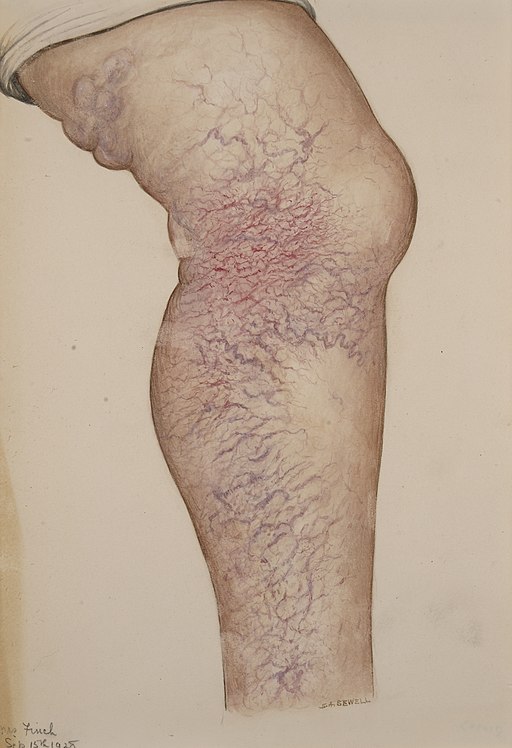
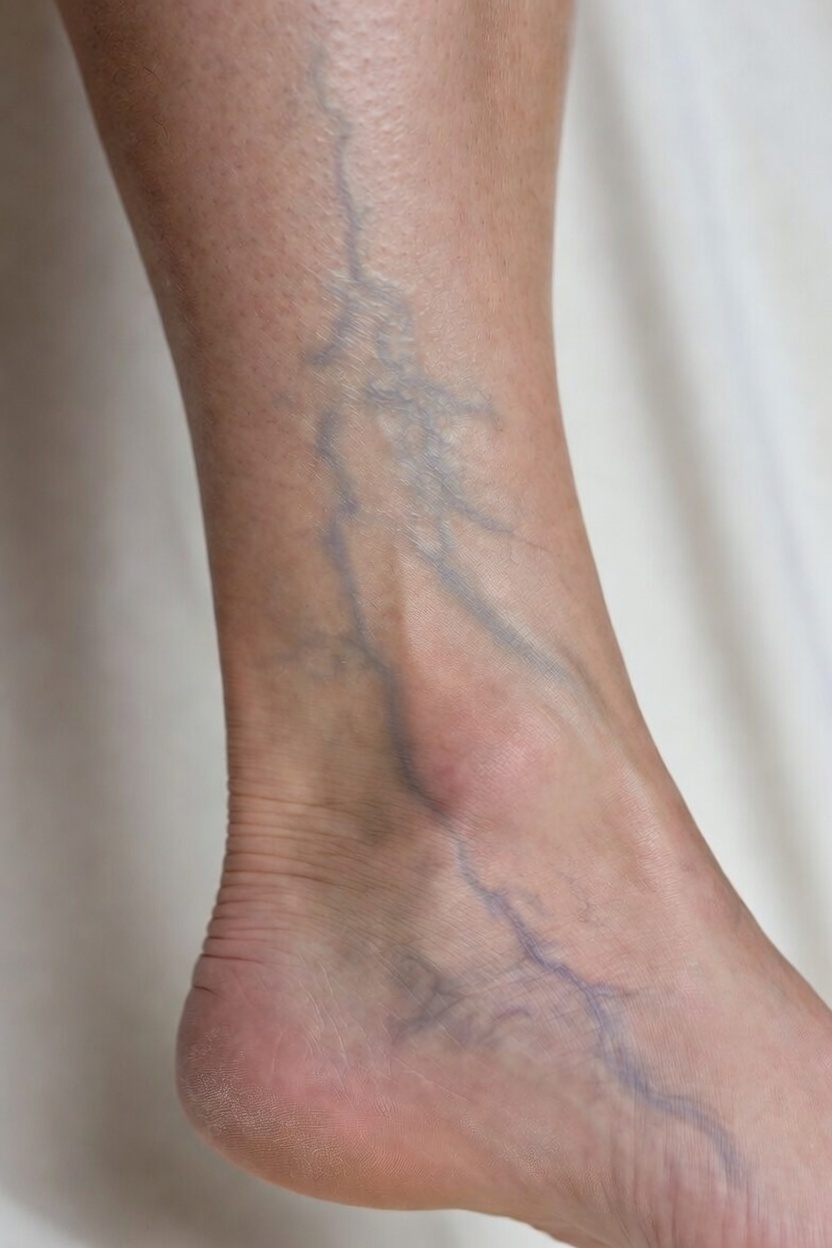
- Discoloration and spider veins appearance in the legs and feet
- Burning sensation or itching
- In severe conditions it can lead to varicose ulcer and eczema.
Which Ayurveda oil is best for varicose veins?
Ayurveda has variety of medicines which are acting according to their Prabhav (action of dravya). Prasarini oil or Sahacharadi oil is the best oil for varicose veins. which again depends on dosha and prakruti of the patient.
Which herbs are useful for varicose veins?
Ayurveda has a treasure full of medicinal plants and herbs. For each disease there are more than 300 herbs.
Some plants lie amruta, kanchanar, musta, kombadnakhi, rajhans, kutaj, nimb, patha, sahachara, Dashmoola, yasthi, karanj, arka, nirgundi, errand, vasa, adrak this are some examples.
Which dosha causes varicose veins?
Granthi’s are formed with the kapha dosha but vata and pitta dosha also play secondary role depending on individual constitution and contributing factors
Vata Dosha:
- Vata governs movement, circulation, and nervous system activity.
- When Vata becomes imbalanced (especially Apana Vata, which governs the lower body), it can lead to poor circulation, dryness, muscle wasting, and vein dilation, contributing to varicose veins.
- Characteristics: Pain, dryness, dark discoloration, and irregular vein patterning
Pitta Dosha (if there’s inflammation or burning sensation):- Can contribute to inflammation, burning, or redness.
Kapha Dosha (if swelling or heaviness is present) – May cause fluid retention, swelling, or blockage in the channels.
Is massage good for varicose veins?
Yes, massage with some specific oils surely helps for varicose veins.
- Improves local blood circulation and lymphatic flow.
- Reduces swelling in the legs (edema).
- Relieves muscle tension, heaviness, and leg fatigue.
- Helps with mild pain and discomfort.
What are the causes of varicose veins formation in body?
Vata Dushti (imbalance of Vata dosha):
- Vata governs circulation and nerve functions.
Rakta Dhatu Dushti (impure or vitiated blood)
- Poor blood circulation and stagnation in the legs causes swelling and bluish veins.
- Ayurveda says, bad pitta creates bad quality Rakta (vitiated blood) in the body.
- Sometimes related to Pitta aggravation (heat/inflammation in blood).
Mamsa Dhatu Kshaya (weakness of muscle tissue):
- Weak supporting muscles around veins fail to hold them properly, so they become dilated and twisted.
Lifestyle factors:
- Ati-sthiti (standing for long time).
- Ati-adhva (excessive walking or traveling).
- Guru bhojana (heavy, oily food slows digestion and circulation).
- Vegadharan (suppression of natural urges)
Can varicose veins go away naturally?
Varicose veins usually do not go away on their own once they appear, without treatment, they often remain the same or gradually worsen over time.
Which exercise is best for varicose veins?
For varicose veins, the best exercises are those that improve blood circulation in the legs and strengthen calf muscles, since calves act like a “pump” to push blood back toward the heart.
Best Exercises for Varicose Veins:
- Walking (30–45 minutes daily)
- Leg lifts (lying on your back)
- Calf raises
- Bicycling or air cycling
- Ankle rotations
- Swimming
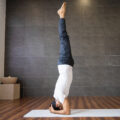
- Yoga poses (e.g., Viparita-Karani, sarvangasana, shirshasana)
Does weight loss help to reduce varicose veins?
Yes, weight loss can definitely help with varicose veins, though it usually won’t make existing veins completely disappear. Excess body weight increases the pressure inside leg veins, making valves weaker. Losing weight reduces this strain. When the weight looses less fat around the abdomen and legs, blood flows more easily back to the heart. People often notice less leg heaviness, swelling, and pain after losing weight. While weight loss won’t reverse already damaged veins, it can prevent them from getting worse or new ones from forming.
Which yoga poses are best for varicose veins?
Yoga is very helpful in varicose veins because it improves blood circulation, reduces pressure in the legs, and strengthens vein walls.
- Viparita Karani (Legs-Up-the-Wall Pose) विपरीत करणी
- Sarvangasana (Shoulder Stand) सर्वांगासन
- Tadasana (Mountain Pose) ताडासन
- Pawanmuktasana (Wind-Relieving Pose) पवनमुक्तासन
- Vrikshasana (Tree Pose) वृक्षासन
- Setu Bandhasana (Bridge Pose) सेतू बंधासन
- Shavasana with Leg Elevation शवासन
- Baddha konasana (Butterfly pose) बद्ध कोनासन
Along with above yoga poses pranayama like Nadishodhana (नाडीशोधन ), bhramari (भ्रामरी )and kapalbhati (कपालभाती )are very useful as this have indirect effect on stress level and to balance Tridosha’s.
How can I stop my varicose veins getting worse?
This is very important because while varicose veins often cannot be fully reversed, you can definitely stop them from getting worse and reduce symptoms with the right daily care followed by some Ayurveda therapy and medicine.
This is why Ayurveda has cured all the disease from the root.
What to avoid for varicose veins?
- Prolonged standing or sitting
- Crossing your legs while sitting
- Wearing tight clothes
- High-impact exercises without preparation or no exercise.
- Smoking
- Excessive alcohol consumption
- Excess salt & processed foods
- Fried & oily foods
- Refined sugar & sweets
- Red meat & heavy, hard-to-digest foods
- Excess caffeine
- Obesity
- Skipping exercise
How can I naturally improve my varicose veins?
You can naturally improve varicose veins by combining lifestyle changes, exercises, dietary measures, and herbal/natural remedies. While these won’t usually make veins disappear completely, they relieve symptoms, slow progression, and improve circulation.
What is the best food for varicose veins?
Below are some food list which helps to prevent varicose veins.
- Legumes: Lentils, chickpeas, and beans.
- Whole grains: Oats, brown rice, and whole wheat.
- Fruits and vegetables: Berries, apples, pears, carrots, and leafy greens.
- Nuts and seeds: Chia seeds, flaxseeds, and almonds.
- Berries: Blueberries, strawberries, and blackberries
- Leafy greens: Spinach and kale are rich in antioxidants, magnesium, and vitamins C and K.
- Avocados: Contain antioxidants and are a good source of vitamins C and E
- Ginger and beetroot.
Is leech therapy good for varicose veins?
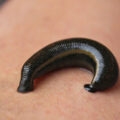
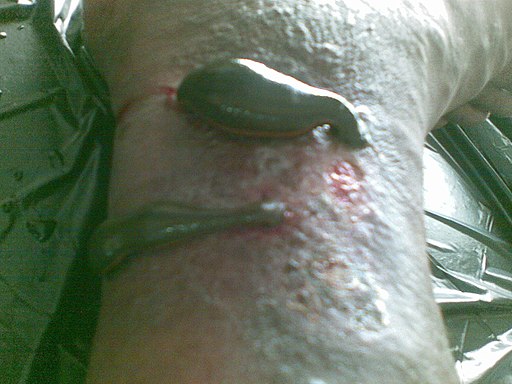
Leech therapy involves applying medicinal leeches to the affected skin. Leeches secrete substances such as hirudin, a natural anticoagulant that can improve local blood flow and reduce clotting temporarily. This has made leech therapy useful in some medical settings—especially in reconstructive surgery to relieve venous congestion. Leech therapy is effective to reduce pain and swelling; it starts the blood circulation.
How does Ayurveda treat varicose veins?
In Ayurveda there are two types of treatment included 1) shaman (internal medicine) and 2) shodhana (panchakarma/ detoxification)
According to Ayurveda dosha treatment is necessary in every disease. In shaman therapy internal medicines are needed to be consumed to improve digestion and to reduce the ama from the body.
Shodhana :- Shodhana is called panchakarma which is also known as detoxification and rejuvenation therapy. In shodhana following treatments are included
- Raktmokshana (रक्तमोक्षण) (Blood letting) which also include jalokavacharan (Leech therapy)
- Virechana (विरेचन ) (purgation/ laxation) Especially when Pitta–Rakta dushti is dominant
Helps in chronic discoloration, burning sensation - Basti (बस्ती ) (most important)
Anuvasana + Niruha basti
Best for Vāta-dominant chronic varicose veins
Improves venous tone, constipation, circulation
Shamana Chikitsa (Internal Medicines):
Internal medicines are useful in varicose veins to improve blood circulation to remove clots, to reduce swelling and pain. According to Ayurveda, internal medicines differ and decide according to dosha and prakriti of a person. Some commonly used formulations are :-
- Amruta (guduchi)
- Kaishora Guggulu
- Punarnavadi Guggulu
- Manjisthadi Kwatha
- Sarivadyasava
- Guduchi
- Triphala
- Arjuna
- Chandrakala ras
- Tapyadi loh
- Arogyavardhini
- Gandhak rasayan and many more
What are the side effect if we don’t treat varicose vein?
If varicose veins are not treated, they usually worsen over time which can cause several complication like leg pain, heaviness, swelling, throbbing, night cramps, restlessness, skin discoloration, ulcers, non-healing wound or DVT (deep venous thrombosis) which can lead to life threatening pulmonary embolism.
Does varicose veins have connection with heart attack?
Varicose veins directly do not cause heart attack, but in some people they can be a warning sign of circulation or clotting risk along with some other symptoms. So never ignore any of symptoms or disease proper treatment is needed.
“Ayurveda treats the Roots, not just the Veins”
Written By…
|
Dr. Pallavi Shinde is the director at Shree Vishwamukta Yog, Ayurved and Panchakarma Clinic at Pune, India. She always uses ayurvedic proprietary formulations for many chronic health diseases & many products for Skin Diseases & beauty products. She is a hardcore Researcher, Practitioner, Promoter of Ayurveda. Contact today to book an appointment. |